Geofence breach events
Inspect recorded fence boundary events.
Open the geofence view in Reports; access and employee scope follow your report permissions.
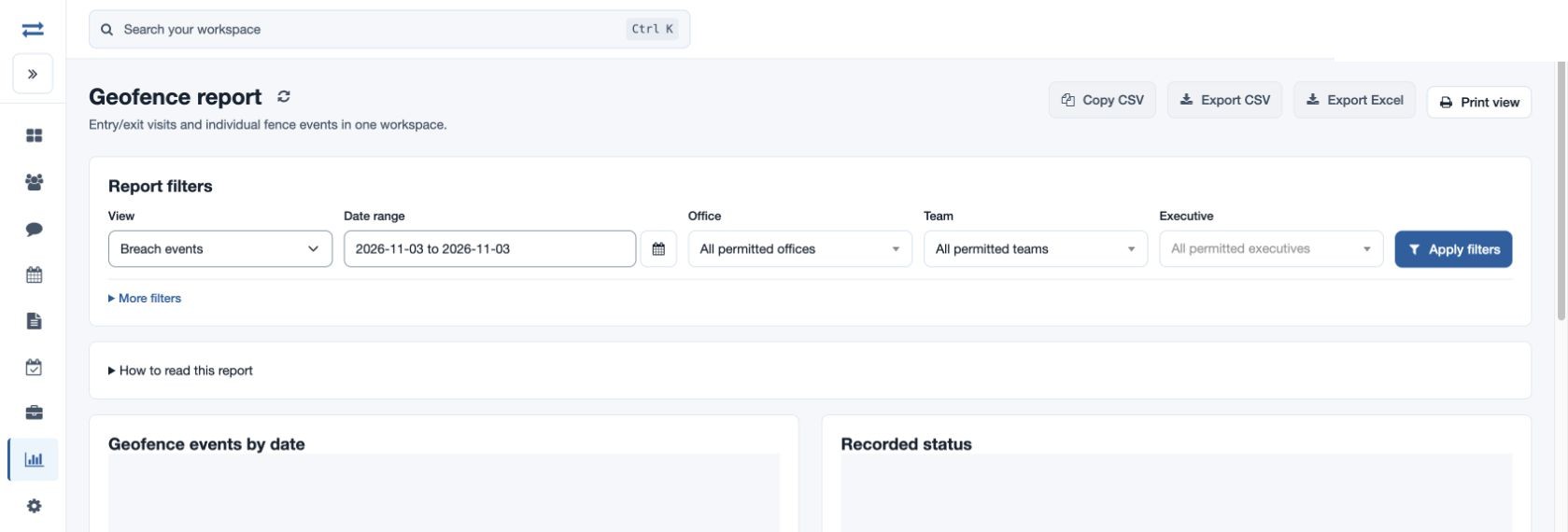
Filter and review
- Choose the named View, Date range, Office, Team and Executive. Expand More filters to search Employee or fence name, then select Apply filters.
- Review the date and status charts and sortable records. Common columns identify the record, employee, email, team, office, recorded time, fence, coordinates and radius.
- Inspect Geofence locations and Location records when available. Map lines connect recorded locations, not driving routes. Sort and page the location table; use its Map action where available.
- Use Copy CSV, Export CSV, Export Excel or Print view where permitted.
Interpret this view
Each row includes the fence, coordinates, radius, Event and Recorded status. Events can be Moved in, Moved out or Unknown. Treat these as recorded boundary events and inspect their location evidence before follow-up.
Example and troubleshooting
Filter a fictional North team for a day and compare the event time with the recorded fence. If empty, check scope, date, name and whether a location or fence event was recorded. Invalid or missing coordinates cannot create a map point.
Interpret a breach
The geofence feature and report permission are required. Moved out and Moved in describe recorded boundary events; Unknown means the event could not be classified. The map identifies the fence location rather than a complete route. Narrow the period or employee scope if the selection exceeds 2,000 records.