
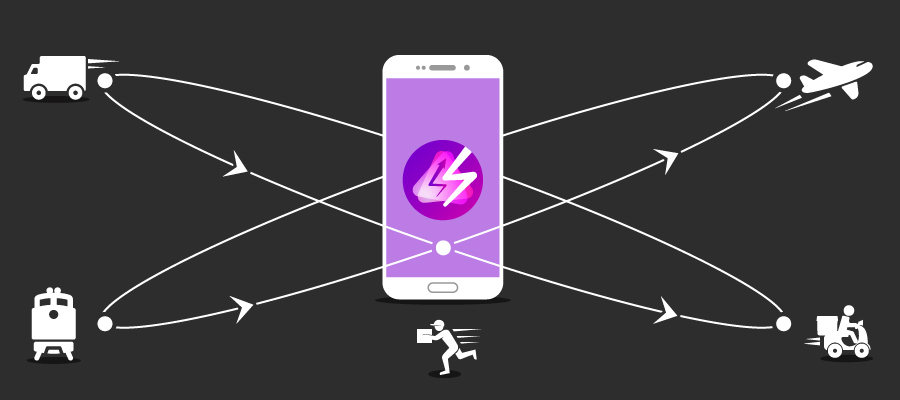
The logistics industry plays a critical role in ensuring the on-time transportation of goods and products from the place of origin to the end consumer. From books, clothing, machinery, kitchen appliances, food items, and electronic devices to industrial equipment, logistics companies manage the movement of a wide range of products.
Courier services, delivery services, and freight transportation companies are all part of the logistics ecosystem. To manage these operations efficiently, modern businesses increasingly rely on Field Force Management Software integrated with GPS tracking technology.
Logistics Industry Challenges: Time, Money, and Resource Management
One of the biggest challenges in the logistics industry is managing time, cost, and resources simultaneously. Logistics companies constantly worry about whether customers are receiving their orders on time.
The two primary objectives of every logistics organization are:
- Timely delivery
- Complete customer satisfaction
Despite multiple operational solutions introduced over time, achieving a perfect balance between delivery schedules, operational costs, and workforce productivity has remained a major concern.
This ongoing struggle led to the adoption of Field Force Management Software with GPS tracking, which has significantly reduced operational inefficiencies in logistics.
Role of Field Force Management Software in Logistics Operations
Field Force Management Software enables logistics companies to track, manage, and optimize on-field employees and delivery executives in real time. When integrated with GPS tracking, it offers complete visibility into workforce activities and vehicle movement.
This technology has become a game changer for logistics businesses seeking higher productivity and better customer experience.
What Is GPS Tracking and How Does It Support Field Force Management?
GPS (Global Positioning System)
GPS is a radio-navigation system consisting of around 24 satellites orbiting the Earth. It helps identify the exact location of vehicles, devices, or individuals on land, sea, or air.
Although GPS offers high accuracy, its precision may occasionally be affected by weather or environmental conditions.
How GPS Works
GPS satellites circle the Earth twice daily and transmit signals to GPS-enabled devices. These devices use a mathematical method known as trilateration to calculate their precise location based on signal data.
GPS Tracking in Field Force Management Software
GPS tracking allows logistics companies to monitor:
- Delivery vehicles
- Sales representatives
- Courier personnel
- Field executives
By tracking moving entities in real time, Field Force Management Software ensures better coordination, faster deliveries, and improved accountability.
Importance of Field Force Management Software in the Logistics Industry
Before GPS-enabled field force solutions, tracking delivery staff and organizational resources was extremely difficult. Managers had little visibility into employee productivity or real-time field activity.
With the introduction of Field Force Management Software, logistics businesses gained:
- Real-time workforce visibility
- Accurate activity tracking
- Transparent performance measurement
Today, it acts as a powerful decision-making tool, allowing managers to monitor every activity linked to time, cost, and resources.
Example: Usage of Field Force Management Software in Courier Services
In today’s digital-first world, customers prefer ordering products online, fueling the rapid growth of e-commerce logistics.
Let’s understand how Field Force Management Software with GPS tracking works using an example of ordering a kitchen appliance from Amazon.
Step-by-Step Delivery Process
- Order placement: The order is received and recorded in the system.
- Executive assignment: The store manager tracks the workforce and assigns the nearest available delivery executive.
- Route optimization: The executive uses GPS-based routing to identify the shortest and fastest route.
- Delivery confirmation: The product is delivered, and customer acceptance is recorded digitally or biometrically.
- Real-time update: The manager receives instant delivery confirmation and sends notifications to the customer.
TeamSpoor: A Field Force Management Software for Logistics
TeamSpoor is an Android-based Field Force Management Software for sales and delivery executives, supported by a web-based dashboard for managers.
It enables organizations to:
- Track on-field employees in real time
- Monitor location and movement
- Improve workforce productivity
Using the check-in and check-out system, TeamSpoor automatically captures GPS data and fills location details without manual input.
Attendance, Transparency, and Productivity Management
With TeamSpoor, field executives can:
- Mark attendance from any location
- Log customer visits instantly
- Maintain transparency in daily activities
This makes TeamSpoor not only a tracking solution but also an attendance and absenteeism management system, helping logistics companies enforce discipline and meet revenue targets.
DSR Automation in Field Force Management Software
One of the most valuable features of TeamSpoor is DSR Automation (Daily Sales Report).
Manual DSR maintenance is:
- Time-consuming
- Prone to errors
- Often delayed
With TeamSpoor:
- DSRs are generated automatically in real time
- Managers can view performance data instantly
- Reports show customer visits, prospects handled, and daily activity summaries
Benefits of Field Force Management Software in Logistics Industry
1. Fleet Management and Last-Minute Assignments
Field Force Management Software helps logistics managers:
- Track vehicle locations in real time
- Identify the nearest available executive
- Assign urgent or last-minute delivery requests efficiently
This capability is especially useful for express and instant delivery services.
2. Cost Reduction and Resource Control
Real-time tracking prevents:
- Misuse of company vehicles
- Unproductive personal tasks during work hours
- Fuel and time wastage
This leads to lower operational costs and better resource utilization.
3. Route Optimization to Improve Productivity
By analyzing different delivery routes, Field Force Management Software enables:
- Shorter delivery times
- Reduced fuel consumption
- Increased number of daily deliveries
For example, executives handling multiple deliveries in the same region can follow the most optimized route.
4. Real-Time Delivery Notifications
Through the check-in and check-out system:
- Delivery location is auto-captured via GPS
- Customer acceptance is recorded digitally
- Managers receive instant delivery updates on the dashboard
This ensures real-time delivery tracking and transparency.
5. Improved Workforce and Performance Management
Detailed reports help managers:
- Compare delivery efficiency among executives
- Identify top performers
- Assign workloads based on individual capability
This leads to better team utilization and higher customer satisfaction.
6. Reduced Losses from Canceled Orders
When orders are canceled after dispatch, Field Force Management Software helps:
- Identify the exact location of the delivery
- Redirect executives immediately
- Save fuel, time, and operational cost
Conclusion
The usage of Field Force Management Software in the logistics industry has transformed the way deliveries, workforce, and fleets are managed. When combined with GPS tracking, it improves visibility, efficiency, accountability, and customer satisfaction.
Solutions like TeamSpoor empower logistics companies to streamline operations, reduce costs, optimize routes, and gain a competitive edge in today’s fast-paced delivery ecosystem.